Rebuilding Delta Realty: A Dexter Brokerage, Before and After

Every brokerage website is a decision made at a particular moment, usually with a particular budget, usually by someone with a business to run. Delta Realty’s previous site was a reasonable version of that decision. It listed properties. It had the team on it. It worked.
The question that eventually comes up is not whether a site works. It’s whether it’s still the right one — and for Delta, the honest answer had less to do with how the site looked than with what it could and couldn’t do.
What the old site was
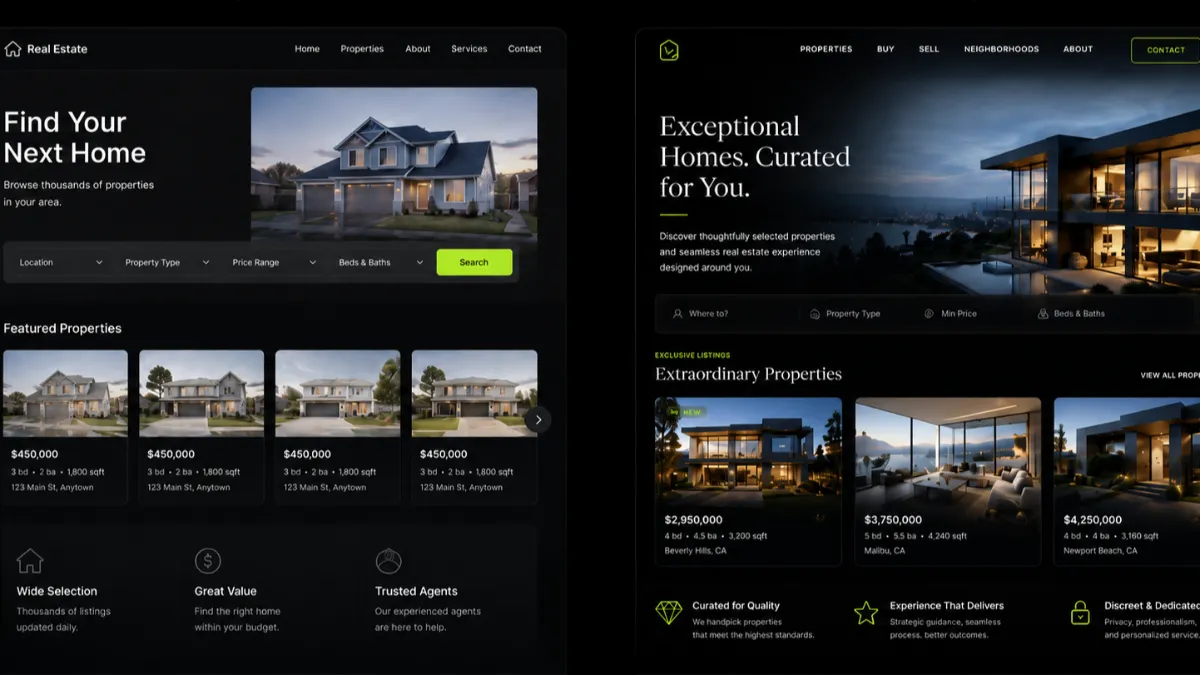
A conventional brokerage template: hero image, featured properties, a listings page driven by search filters, a team page, a contact form. Nothing about it was unusual, and that is precisely the thing worth noticing. It looked like a lot of other brokerage sites, because it was built the way a lot of other brokerage sites are built.
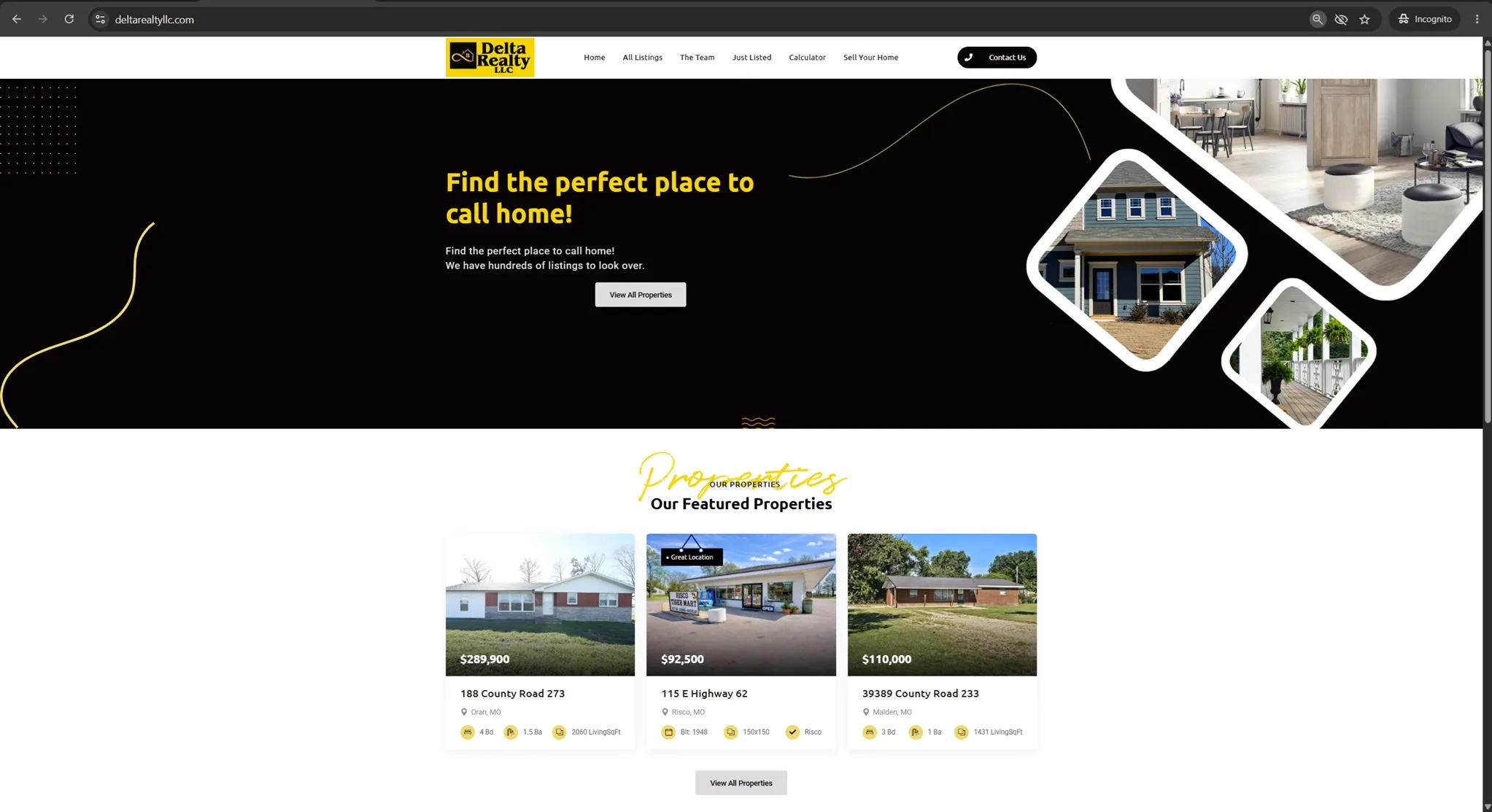
The differences that mattered turned out not to be visual.
What actually changed
Speed, measured properly
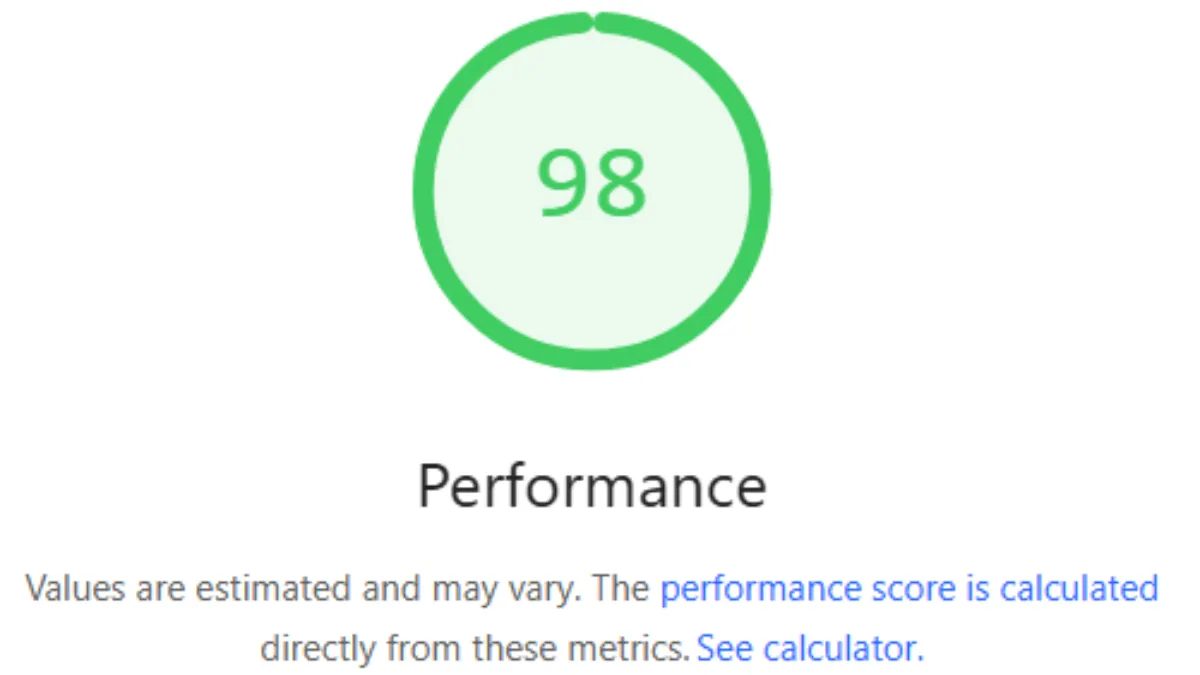
The rebuilt site was tested on Google’s PageSpeed Insights five separate times on the same day, each with a cache-busting parameter so no run benefited from the one before it. Mobile performance scored 97, 95, 92, 96 and 96 — a median of 96. Accessibility, Best Practices and SEO returned 100 on every one of the five runs. First Contentful Paint was 0.8 seconds. Cumulative Layout Shift was zero.
- Performance (median of 5)
- 96
- Accessibility
- 100
- Best Practices
- 100
- SEO
- 100
- First Contentful Paint
- 0.8s
- Cumulative Layout Shift
- 0
PageSpeed Insights, mobile, five runs, August 12 2026. Lab data.
One caveat worth stating plainly, because it’s the kind of thing that gets quietly omitted: these are lab scores. Google’s Core Web Vitals field data — the measurement taken from real visitors’ browsers — reads “Not Applicable” for this site, because it doesn’t yet have enough traffic in Google’s Chrome UX Report to generate one. That’s normal for a brokerage in a town of eight thousand. It is not the same thing as a real-user measurement, and calling it one would be a small lie that costs more than it buys.
Accessibility, which nobody asks about until they have to
Every page on the main site that we control was hardened to a Lighthouse Accessibility score of 100. Labeled form inputs, visible keyboard focus, real contrast ratios, images with descriptive alt text, and nothing that conveys meaning by color alone.
Real estate sites are a frequent target for ADA demand letters. That was part of the reasoning. The larger part is that a buyer using a screen reader, or zooming to 200% because the type is small, is a buyer — and until this work was done, that person could not use the property search.
The listing pages themselves are a different story, and the honest version is worth telling. Those come from a third-party IDX vendor whose own markup sits inside our page. We fixed what we could reach — unlabeled search controls, a filter bar that broke at 200% zoom — and documented what we couldn’t, because the remaining gaps live in markup the vendor injects at runtime. Rewriting someone else’s DOM with JavaScript is a fix that breaks on their next platform update. We chose the version that keeps working.
Being found
The site went live on June 19, 2026. Here is what the eight weeks after launch look like against the eight weeks before it, in Google Search Console, excluding searches for Delta’s own name — so this is people who didn’t already know the brokerage existed.
Impressions went from 1,209 to 4,761. Average position went from 20.6 to 13.0. Clicks went from 29 to 50.
And one number moved the wrong way: click-through rate fell from 2.40% to 1.05%.
That decline is what it looks like when a site starts appearing for searches it never used to appear for. Most of those new impressions land in positions eight through fifteen, where almost nobody clicks. The site is being shown to about four times as many people and converting a smaller share of a much larger pool. That’s a real trade-off, not a hidden defeat — but it is the number a case study is most tempted to leave out, so here it is.
What this does and doesn’t prove
The rebuild and the visibility improvement happened in the same window. That is a correlation, and correlation is all it is. There was no control group. Google shipped its own ranking changes during the period. The Southeast Missouri market moved on its own schedule. Anyone who tells you a website rebuild caused a ranking change is describing an experiment they did not run.
What can be stated flatly: the site is measurably fast, measurably accessible, and appearing in front of substantially more people than it was. What follows from that is a reasonable expectation, not a demonstrated fact.
The part that isn’t in the numbers
Search a small-town brokerage’s own listing address and you’ll often find Zillow first, then three competing brokerages, and the brokerage that actually holds the listing nowhere on the page. That’s not anyone behaving badly — it’s how IDX works. Every brokerage in the MLS displays every other brokerage’s listings.
What a brokerage can own is its own ground: the searches where a local firm should be the obvious answer, the experience a visitor gets when they arrive, and whether the person on the other end of that visit can find a phone number in under two seconds on a phone.
That’s most of what this rebuild was actually about.
Curious what your own site is actually doing?
A Lead System Audit is a plain-language teardown of your current site's speed, accessibility and conversion setup.
Request a Lead System Audit